

“It’s 10 PM. Do You Know Where Your Children Are?”
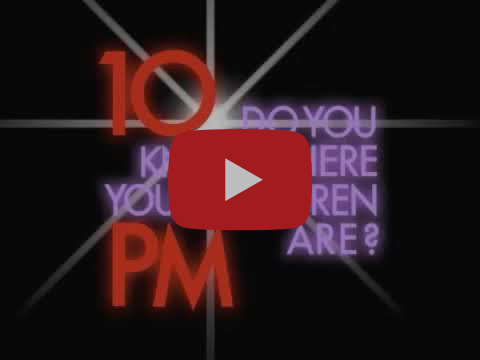
If you parented—or grew up—in the 1970s, 80s, or 90s, you might remember the familiar nighttime public service announcement that interrupted the evening news: “It’s 10 PM. Do you know where your children are?” It was a gentle reminder to parents of a bygone era to make sure their children had come inside for the night. Imagine that—children were out playing so freely that a national reminder to check on them actually made sense. Those were the days when kids disappeared outdoors after breakfast and didn’t return until the streetlights came on. Different times.
Today, most parents can answer that question instantly. We know exactly where our children are—at home, supervised, safe, and accounted for—we have Apple AirTags and Life360 to prove it. Yet while this may be a victory for safety and peace of mind, it has also brought an unintended loss: the disappearance of childhood autonomy, adventure, and meaningful risk.
The Importance of Healthy Risk
In The Anxious Generation, social psychologist Jonathan Haidt observes that from the 1990s onward, parents increasingly replaced a play-based childhood with a screen-based one. In just a single generation, the natural, outdoor independence that once defined American childhood has nearly disappeared. In 1969, more than half of all children walked to school on their own (as early as first and second grade); today, fewer than one in ten do. It’s now uncommon even to see a child riding a bike to the grocery store to pick up a dozen eggs for mom—a simple errand that only a few decades ago was an ordinary part of growing up. Haidt points out that the typical “roaming radius” of a child—the distance they’re allowed to go unsupervised—has shrunk by nearly 90% since the 1970s. Fear of “stranger danger” and a culture of constant supervision have made childhood safer, perhaps, but much smaller.
Haidt argues that this shift matters deeply because children are “antifragile” in nature. That is to say, children actually need some degree of risk and challenge in order to grow strong and resilient. A scraped knee, a wrong turn, or a hard-learned lesson used to be part of growing up. These small encounters with risk taught discernment, courage, and self-control. When we eliminate every danger, we also eliminate many of the experiences that build wisdom and confidence in our children. Haidt attributes the dramatic increase in anxiety, depression, and suicidal ideation to the rapid decline of real-world play and independence.
From Oversight to Responsibility
At Asbury Classical School, we believe that education is not simply about protecting children from the world but preparing them for it. Our classrooms and playgrounds are places where students are encouraged to think, question, explore, and sometimes fail—all within the safety of loving guidance. At Asbury, we believe in doing hard things (like public speaking, Singapore Math, and reconciliation), trusting that both success and failure can glorify God and shape our character for His purposes.
This kind of formation requires that there be room for personal responsibility. When adults solve every problem, children never have to learn to solve them on their own. As children grow, they need opportunities to make decisions, to own their work, and to experience the natural consequences of those decisions. Ultimately, moral development requires small, consistent doses of real-world responsibility.
In the Christian imagination, children are not fragile beings to be sheltered and coddled indefinitely but image-bearers being trained for courage and holiness. God’s world is full of both wonder and risk—and our calling as parents is not merely to protect, but to equip.
So perhaps that old public service announcement still asks a timely question, if we look at it in a different way. It’s 10 PM. Do you know where your children are?
Are they learning to navigate the world with confidence?
Are they trusted with small freedoms that prepare them for faithfulness and maturity?
Are they being given responsibility and experiencing consequences?
Are they developing self-control and contributing to the household?
Are they attending a school that encourages them to do hard things?
Because one day, we won’t know exactly where they are. And that’s the point.
They will be out in God’s world—sturdy and ready for whatever may come.
Toward a Life Lived in Christ,
Chris Breiland, Head of School