

The Communion of Saints
From the very beginning, God ordered creation with times and seasons as a gift for His people. Genesis tells us that God made the sun, moon, and stars “…to separate the day from the night. And let them be for signs and for seasons, and for days and years…” (Genesis 1:14). Time itself is not random but structured by God to help us remember His faithfulness and live in rhythm with His creation.
Throughout Scripture, God gave His people feasts and holy days (we’re more familiar with the contracted version “holidays”) to mark these seasons of life and to teach them about His saving work. Israel’s calendar was filled with these appointed times—Passover, the Feast of Booths, the Day of Atonement, and others (see Leviticus 23). Each feast was a memorial of God’s mighty acts of salvation and a foretaste of the greater redemption to come in Christ.
In Christ, these feasts find their fulfillment, and the Church continues to mark time with special days and seasons of remembrance and celebration. The rhythms of the Christian year—Advent, Christmas, Lent, Easter, Pentecost, and beyond—invite us to rehearse the story of Jesus and anchor our lives in His saving work.
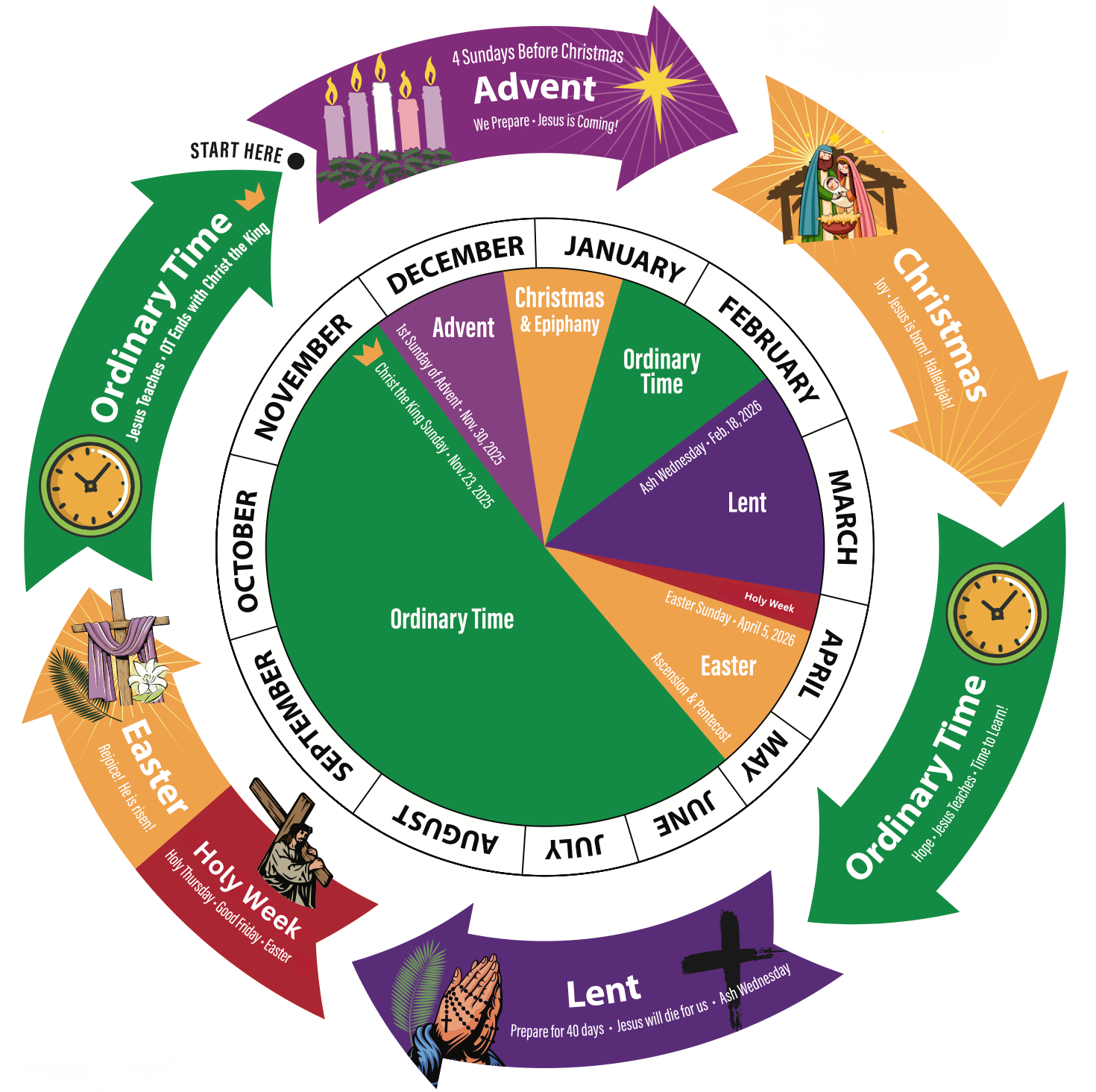
Observing the Christian Calendar at ACS
At Asbury Classical School, we want families to join us in living the Christian calendar in a way that makes God’s story of salvation come alive. While our celebrations may look different from what is common in the broader culture, our hope is that by observing these seasons together, students and parents alike will grow in faith, understand God’s story more deeply, and see how His redemption shapes every part of life.
At Asbury Classical School, we desire for our students to not only learn about God but to participate in His story of redemption in tangible ways. One important way we do this is through observing the holy days of the Christian calendar.
One of these special days is just one month away: All Saints’ Day, celebrated on November 1st.
What is All Saints’ Day?
All Saints’ Day is a time for the Church to remember and give thanks for all the faithful people—both living and deceased—who have followed Christ. It is not a celebration of perfection, but a recognition of faithfulness, courage, and God’s grace at work in both ordinary and extraordinary lives.
From a Wesleyan-Methodist perspective, the focus is on the communion of saints, the reality that all believers are spiritually connected as the Church across all times and places. The Church is the body of Christ, and the Christians who have gone before us serve as examples of faith, inspiring and guiding us today.
We affirm this when we say the Apostles Creed:
I believe in the Holy Spirit,
the holy catholic* Church,
the communion of saints,
the forgiveness of sins,
the resurrection of the body,
and life everlasting.
Amen.
*universal, belonging to the whole
In the New Testament, the word “saint” literally means “holy one” (Greek: hagios) and almost always refers to believers living on earth, those who are set apart for God. Paul frequently greets churches by addressing them as “saints”:
Romans 1:7 – “To all those in Rome who are loved by God and called to be saints…”
1 Corinthians 1:2 – “To the church of God that is in Corinth, to those sanctified in Christ Jesus, called to be saints…”
Ephesians 1:1 – “To the saints in Ephesus, the faithful in Christ Jesus…”
Scripture also describes a “great cloud of witnesses” and “a great multitude” around God’s throne in heaven, but never refers to them explicitly as saints. Instead, the Bible refers to them as elders, faithful, or the redeemed, emphasizing their holy existence in the presence of God.
Hebrews 12:1 – “…we are surrounded by so great a cloud of witnesses…”
Revelation 7:9-10 – “…a great multitude that no one could count, from every nation, tribe, people and language, standing before the throne…”
The word “Halloween” has its roots in the English language and in the Church’s calendar. “Hallow” means “holy,” and “e’en” is a shortening of “evening.” The term “hallows” refers to “holy ones” or “saints.” Therefore, “Hallow-e’en” or “Hallows’ Eve” literally means “the evening before All Saints’ Day.” Like most holy days, popular culture has made it difficult to discern the authentic spirit of the day. At ACS we aim to reconnect with the true meaning by celebrating and learning from the saints who came before us.
Why We Celebrate
Celebrating All Saints’ Day helps our students:
Learn from the heroes of the faith—ordinary people who lived extraordinary lives through God’s power.
Remember God’s faithfulness across generations.
Understand the reality of the communion of saints and inspiring our students to live faithfully as part of the body of Christ.
At ACS, our All Saints’ Day celebration will include:
Reading stories of faithful men and women from Scripture and Christian history.
Dressing up as a hero of the faith and telling their story to encourage classmates and parents.
Reflecting on how God is calling each of us to live faithfully and courageously as part of His Church today.
I invite your family to join us in celebrating All Saints’ Day by learning from the heroes of the faith, and encouraging one another in holiness.
Toward a Life Lived in Christ,
Chris Breiland, Head of School