

The Next Class Divide: Kids Who Grew Up on Screens vs. Kids Who Didn’t
If you paid attention to the news in the 1990s and early 2000s, you’ll remember a steady drumbeat of concern about students carrying overloaded backpacks. It sounds silly, but textbooks became a literal cross to bear as JanSports burst at the seams, and every news outlet, pediatrician, and physical therapist sounded the alarm about back strain, poor posture, and even long-term spinal problems. Parents were concerned. Schools responded with locker policies, rolling backpacks surged in popularity, and the American Academy of Pediatrics prescribed a backpack weight of no more than 10–15% of a child’s body weight. Still, the burden of books remained.
Around 2010, schools discovered a solution to the problem of heavy backpacks: remove the books.
The first iPad was released in April of that year, and schools quickly adopted the technology, promising lighter loads, interactive lessons, and a modern classroom. By the mid-2010s, roughly 50–60% of U.S. schools reported using digital textbooks. While pediatricians and chiropractors breathed a sigh of relief, educators began to sound a different alarm. In the years that followed, reading comprehension, recall, and deep processing declined, while fragmented attention, skimming, and superficial understanding increased. Today, the ubiquity of screens in classrooms and homes has translated to a global decline in nearly every academic subject since 2010. Essentially, we traded back problems for brain problems.
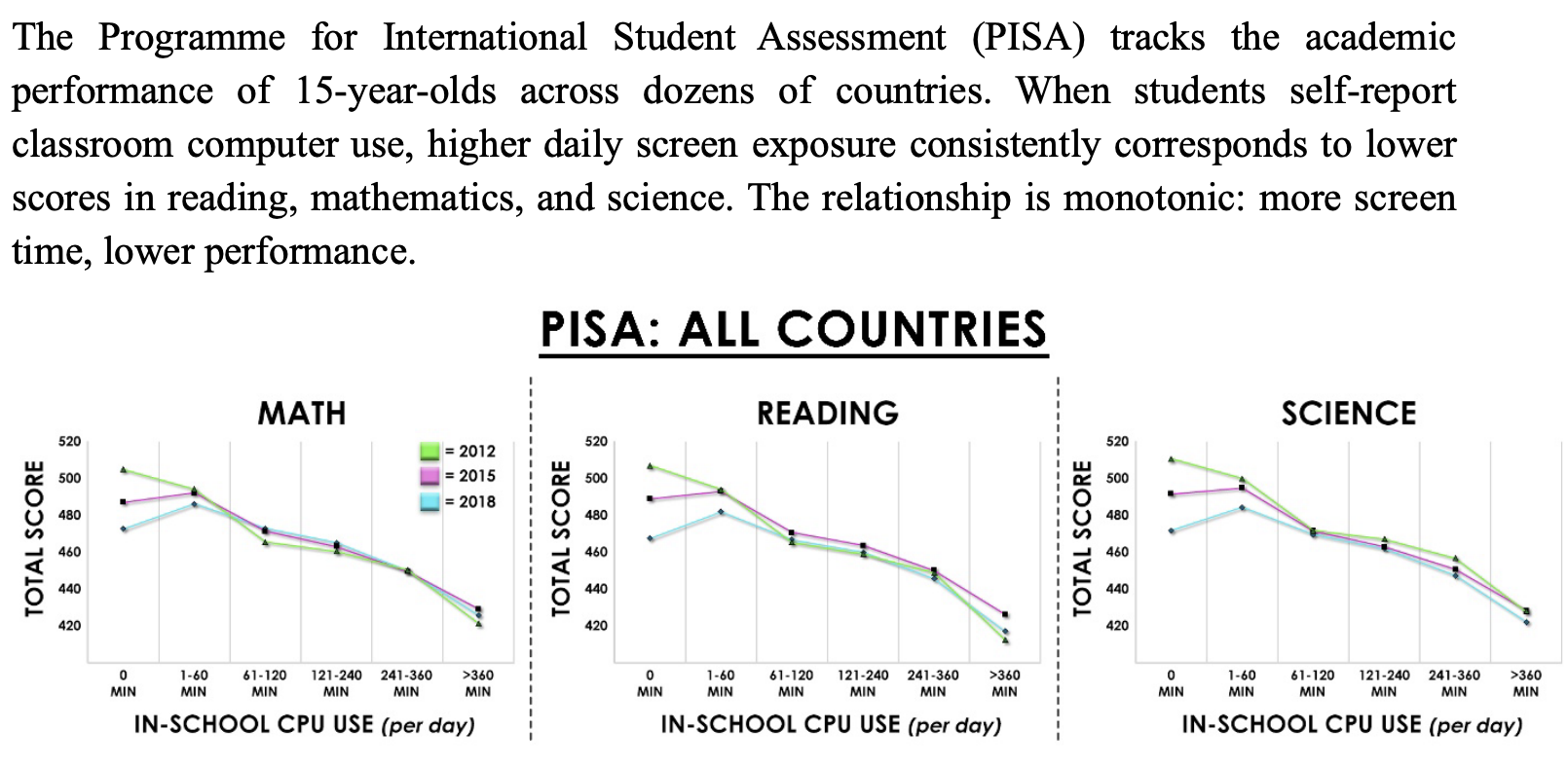
So why the decline?
Well, think of any physical book you have read recently. When you try to recall the information you read, your brain often builds a kind of mental map to help you retrieve it. You might remember things like this, “That idea was about halfway through the book, near the beginning of the chapter, on the left-hand page, close to the bottom.”
This is what researchers call spatial memory: we don’t just remember words, we also remember where those words lived in physical space. The book itself becomes a kind of scaffold or framework for recalling information.
Screens, by contrast, flatten that experience. When you scroll continuously, there are fewer spatial anchors. The content is no longer fixed in a predictable physical location, and your brain has less structure to attach memory to.
And in many ways, that is what computers are designed to do—they do the heavy work of remembering and recalling so that you don’t have to. In the same way that a hammer makes pounding nails easier, a computer makes nearly every academic task easier. Why do the hard work of learning grammar and sentence structure when Grammarly will do it for you? Why spend hours trying to solve equations when Photomath will solve them in seconds and show the work? Why read the book when ChatGPT will summarize it for you and write the book report?
Over time, technology greatly reduces the amount of effort students must expend. And when effort decreases, so does learning. The brain is like any other muscle in that regard.
Dr. Jared Cooney Horvath, Neuroscientist and Educator, recently testified before the U.S. Senate, saying,
Our kids are less cognitively capable than we were at their age. Since we began standardizing and measuring cognitive development in the late 1800s, every generation has outperformed their parents—until Gen Z. Gen Z is the first generation in modern history to underperform their parents on basically every cognitive measure we have—from basic attention to memory, literacy, numeracy, executive functioning, and even general IQ. So, what happened around 2010 that decoupled schooling from cognitive development? The answer appears to be the tools we are using in schools to drive that learning.
The adoption of screens in childhood not only has a negative impact on students academically, but also mentally and physically. Jonathan Haidt, in his 2024 book The Anxious Generation, identifies sharp rises in anxiety, depression, self-harm, and suicidal ideation that track with the decline in academic performance since screens became ubiquitous.
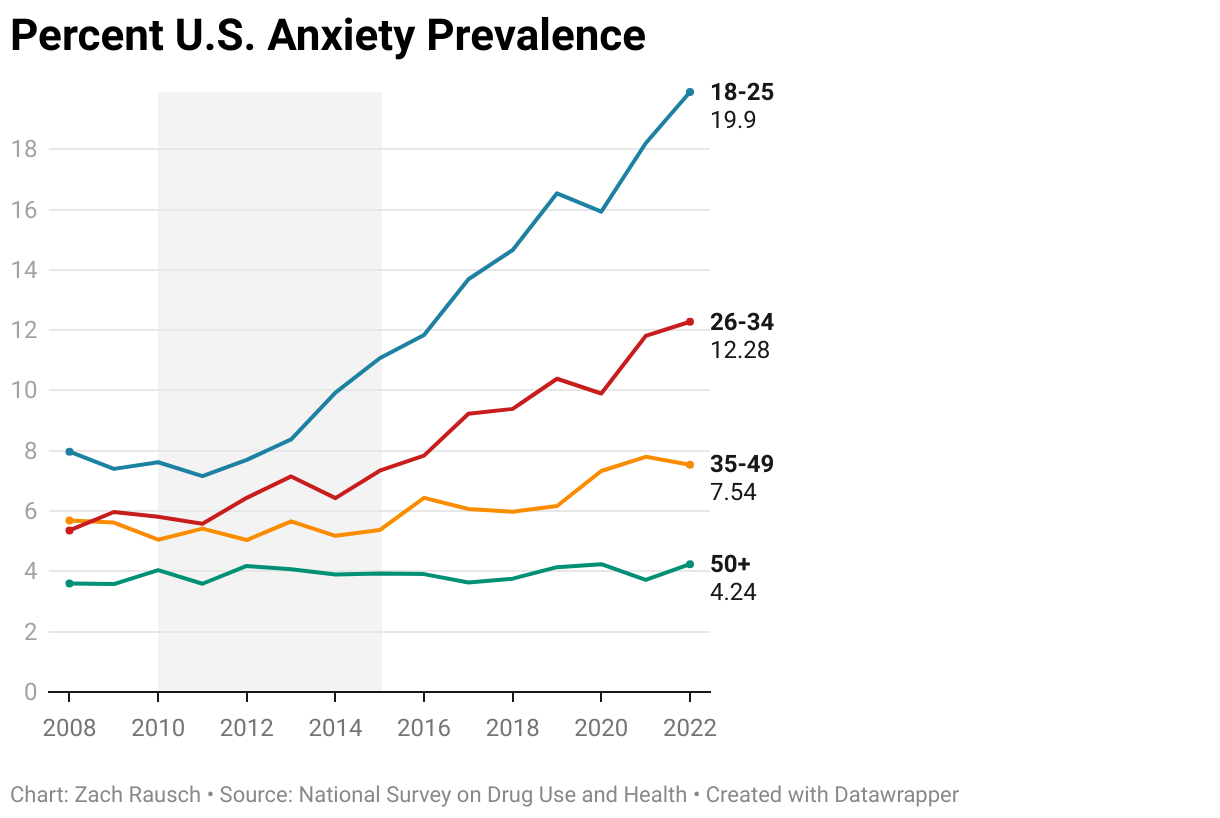
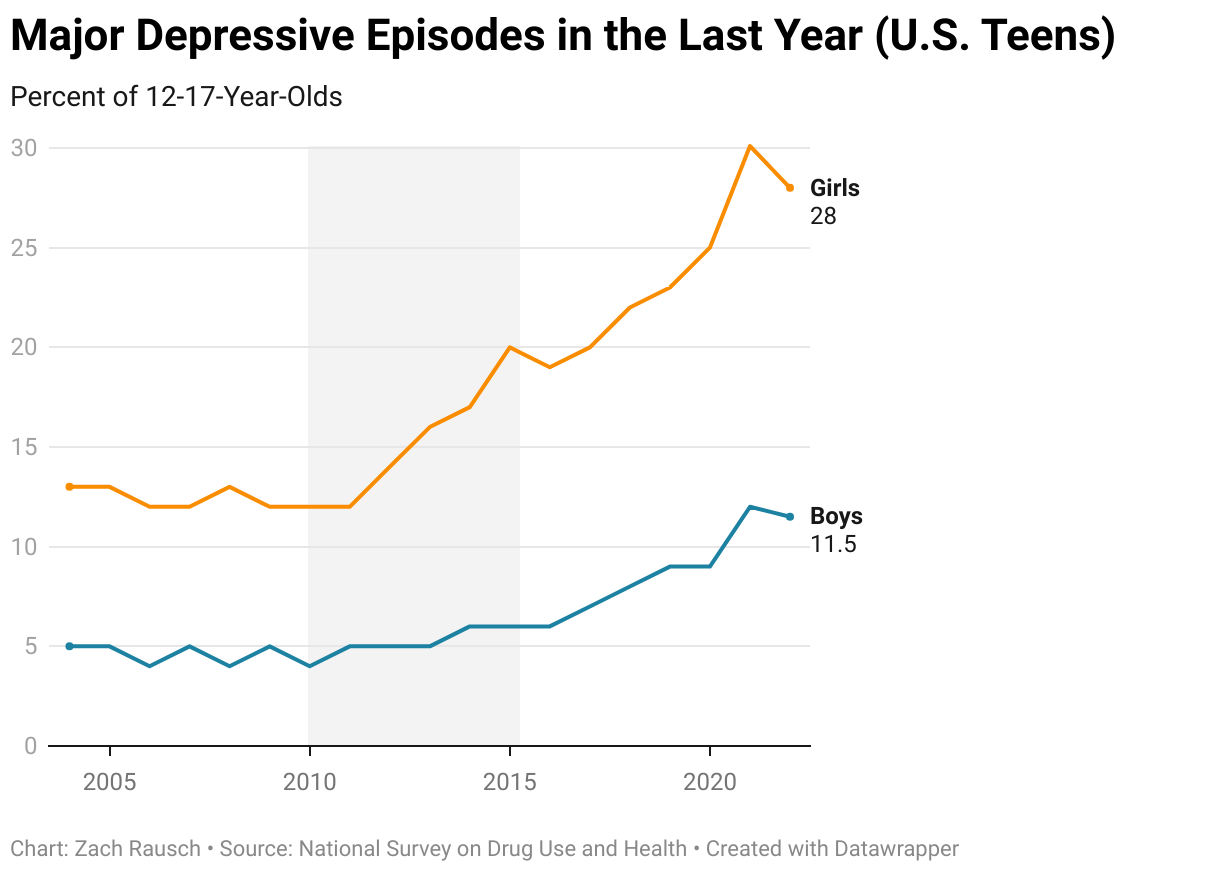
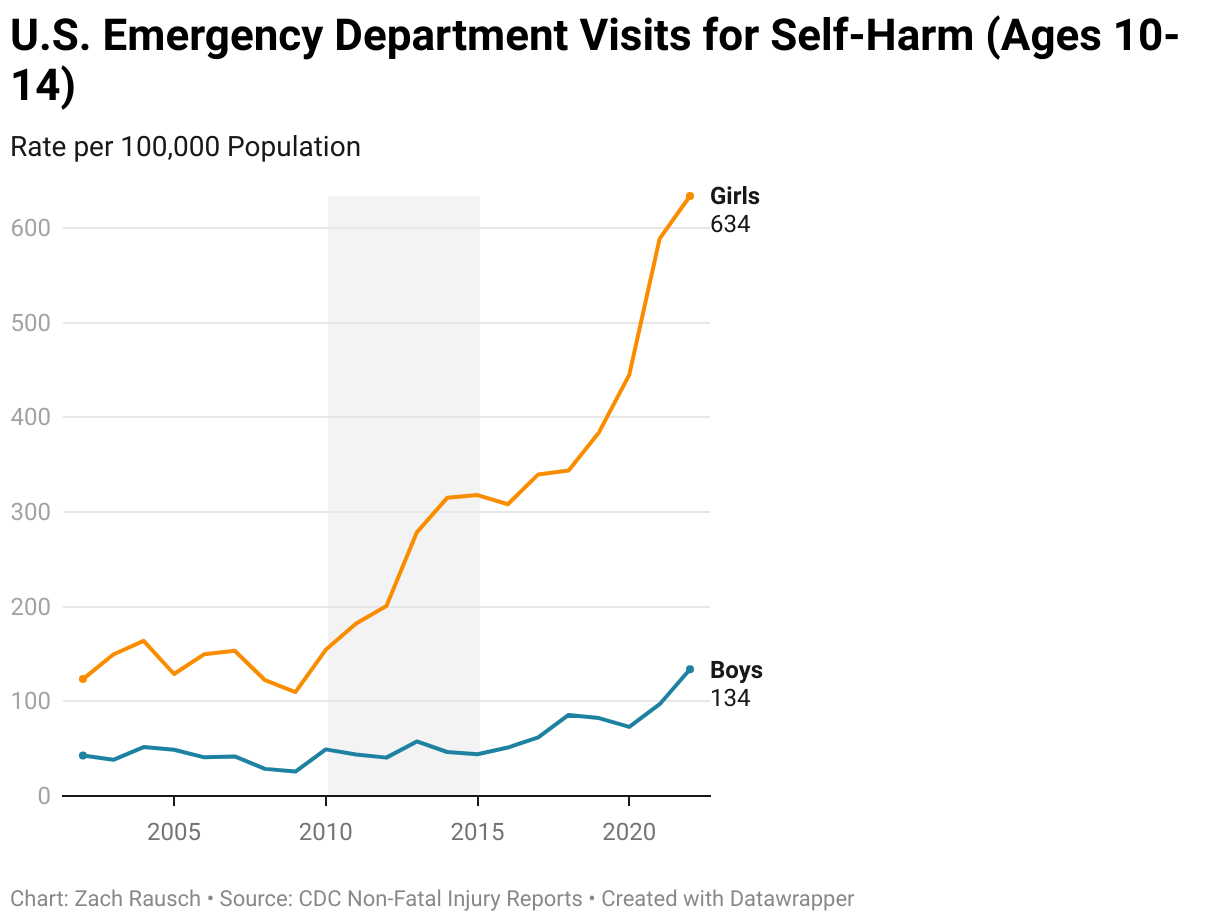
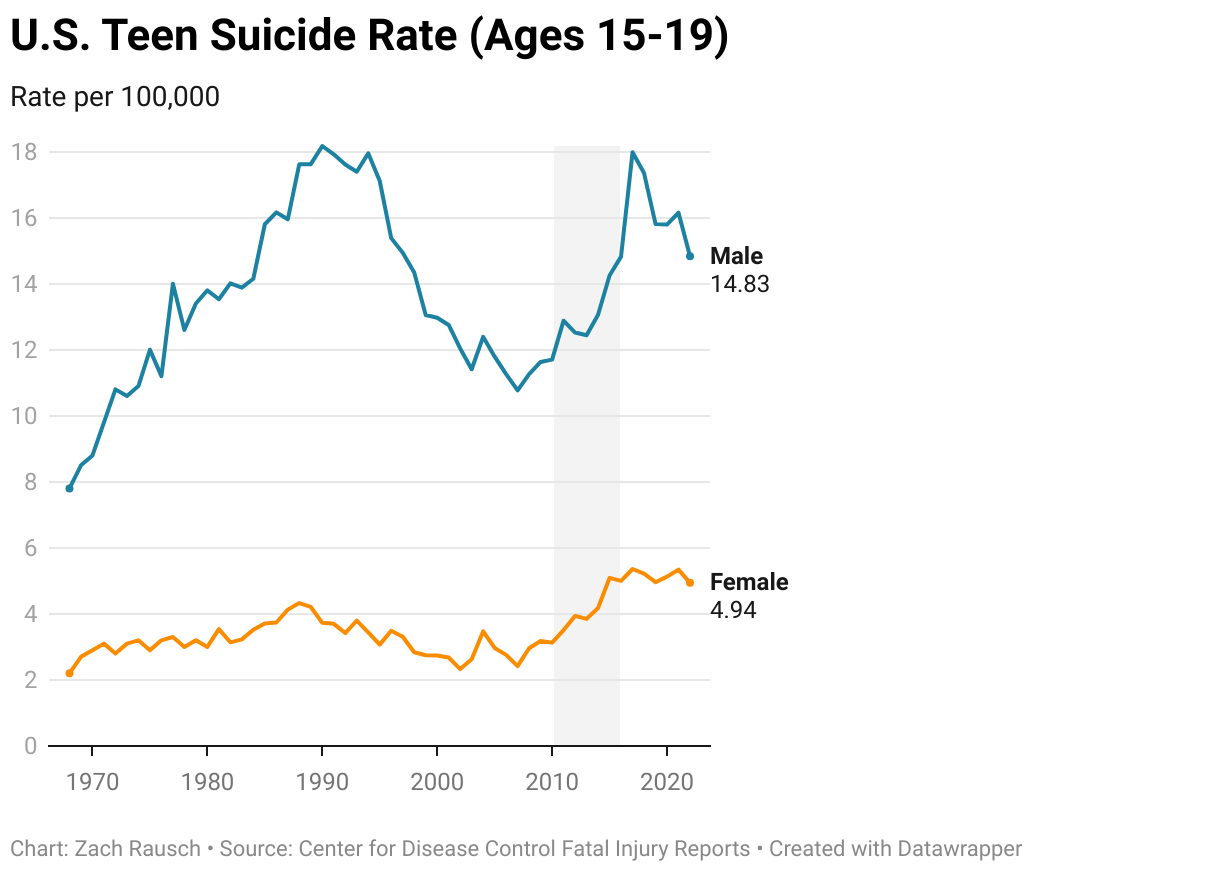
At this point, the data are clear: we have the facts. The more time children spend on screens, the worse they tend to do academically, mentally, physically, and socially.
But you likely already know this. So why do I say it?
Because I truly believe the next great class division won’t be defined by income or zip code specifically, but by childhood itself—between children who grew up on screens and those who didn’t.
The great differentiator of the next generation will be those who had a traditional childhood of playing outdoors, experiencing boredom, attending a low-tech school, spending time with friends, going to church, playing sports, reading books, taking on responsibility, versus those who were mindlessly immersed in a virtual world at home, at school, and everywhere else. The child who is entertained by an iPad at school, at home, in the grocery store, at the doctor’s office, on the car ride, in the restaurant, etc., etc., may not fare as well as children who were trained to navigate real life in those environments.
This is not to sound overly deterministic, but we have experienced these kinds of divisions before. For decades, researchers have documented what is often called the “two-parent advantage,” that on average, children raised in stable two-parent homes have higher rates of high school and college graduation, lower risks of poverty, and higher incomes as adults compared to those in single-parent homes. Ultimately, because God’s design for marriage is grounded in reality. Similarly, the current data trends indicate that children who were given a traditional, low-tech, play-based childhood will outpace children raised on screens in every meaningful metric.
The good news is that this is not a problem beyond our control! Families still have real agency here, and much of this is shaped by the daily decisions we make at home.
Schools matter. Policies matter. Culture matters. But in the end, childhood is still formed in the home.
As parents, we can choose books over screens. Conversation over entertainment. Boredom over busyness. Real responsibilities over shortcuts. We can give our children long stretches of uninterrupted time to read, to think, and to create.
We can insist that learning remain something they do, not something a device does for them.
None of this is easy. It runs 100% against the grain of modern life.
In fact, it may even feel like you are asking your child to live differently from everyone else around them.
Because you are.
And this is why cultivating a low-tech community at Asbury Classical School is essential. So you’re not alone.
If the trends are even half as concerning as they appear, then the families who are willing to reclaim a more traditional, grounded, and attentive childhood will be giving their children a legitimate advantage in life.
In a distracted and over-stimulated age, attention will be a superpower. In an anxious generation, the ability to endure life’s inherent difficulties will be a serious competitive edge. In a culture increasingly immersed in screens, a child who is fully present—mentally, physically, and spiritually—will stand head and shoulders above the rest.
Toward a Life Lived in Christ,
Chris Breiland
Head of School