

The Odyssey and Authorial Intent
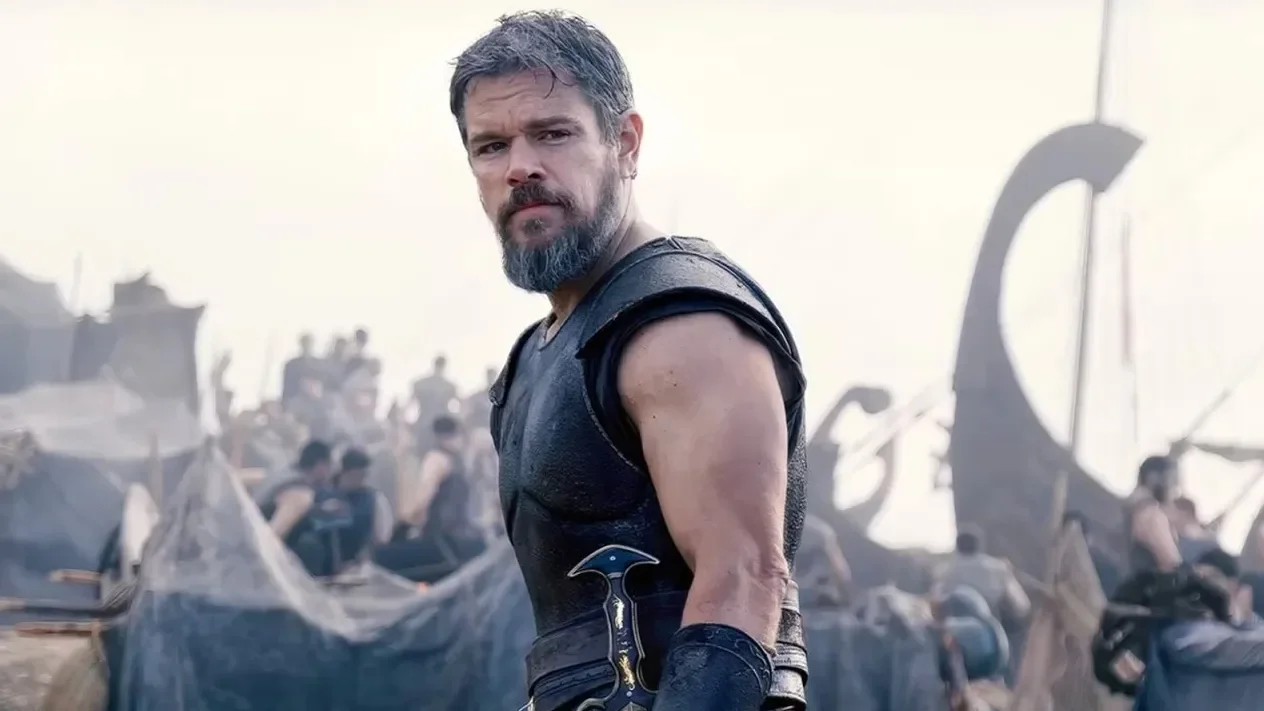
I watched The Odyssey in IMAX last weekend. If you haven’t seen it yet and have never read the epic poem—which is essential reading for all classical school graduates—WAIT! Do yourself a favor and read the book first. Or, at the very least, read Books 9–12, which contain the episodes most people associate with The Odyssey (Polyphemus, Circe, the Sirens, Scylla and Charybdis, etc.). Reading beforehand will make the film immediately intelligible and allow you to develop an informed opinion about the faithfulness of Nolan’s adaptation of Homer’s work. I recommend Robert Fitzgerald’s translation.
Without giving too much away, here are a few thoughts.
Great books rarely translate one-for-one to the big screen. Monumental works like The Odyssey—and certainly the Bible—are nearly impossible to do justice in a three-hour film. Screenwriters and directors are forced to translate and condense sweeping, nonlinear, nuanced narratives into a completely different medium. Every adaptation inevitably involves selecting, omitting, rearranging, and emphasizing. Not to mention the casting decisions that influence the message. In that process, interpretation is unavoidable and, when done poorly, opens the door to misinterpretation, bias, and agenda. The written word simply does not translate one-for-one to film. They are different mediums. As a result, informed viewers will almost always leave the theater saying, “Well, that’s not how it happened in the book.”
With that in mind, the movie is worth watching, with the caveat that it rightly earns its R rating. Nolan’s depictions of Polyphemus and Circe are grotesque and disturbing. Like the poem, the film contains scenes of battle, bloodshed, and slaughter. I believe profanity is always in poor taste, but I found it especially distracting in a work portraying people from the Late Bronze Age. It felt modern and unnecessary, diminishing the timelessness of the story.
Overall, I do think the complexity of Odysseus’ character shined through. He longs for home, yet craves adventure. He loves his men, yet his hubris contributes to their deaths. He is courageous and cunning, but also proud and deeply flawed. Homer gave us a hero who is worth admiring but not imitating—I think Nolan and Damon capture this.
I don’t normally write movie reviews, but it isn’t every day that one of the foundational works of Western civilization, and required reading in every classical school, receives a major film adaptation. More importantly, the film provides an opportunity to talk about an important principle we teach at Asbury Classical School:
Authorial intent is king.
This is How to Read a Book 101.
Whether we are reading Beatrix Potter or Homer, Shakespeare or the Bible, our first question is never, “What does this text mean to me?” Instead, we ask, “What did the author intend to communicate?” Meaning is not created by the reader; it is discovered through careful reading. In this instance, Homer intended to communicate something when writing The Odyssey; the question is whether Nolan has understood what Homer meant and faithfully represented it on screen.
In a time that tends to prize personal opinion, feelings, and agendas above objective meaning, teaching our children to seek an author’s intended meaning is both intellectually honest and spiritually formative. It trains them to submit themselves to a text rather than demanding that the text submit to them. It requires a student to listen before they speak, to receive before they critique, and to pursue truth rather than personal preference. Those are habits that will serve them well in life, not only as readers of classic literature, but as readers of God’s Word and as future moviegoers.
As Mortimer Adler put it in How to Read a Book, “To agree without understanding is inane. To disagree without understanding is impudent.”
Toward a life lived in Christ,
Chris Breiland, Head of School