

Alexander Hamilton and Resurrecting the Dead…Languages
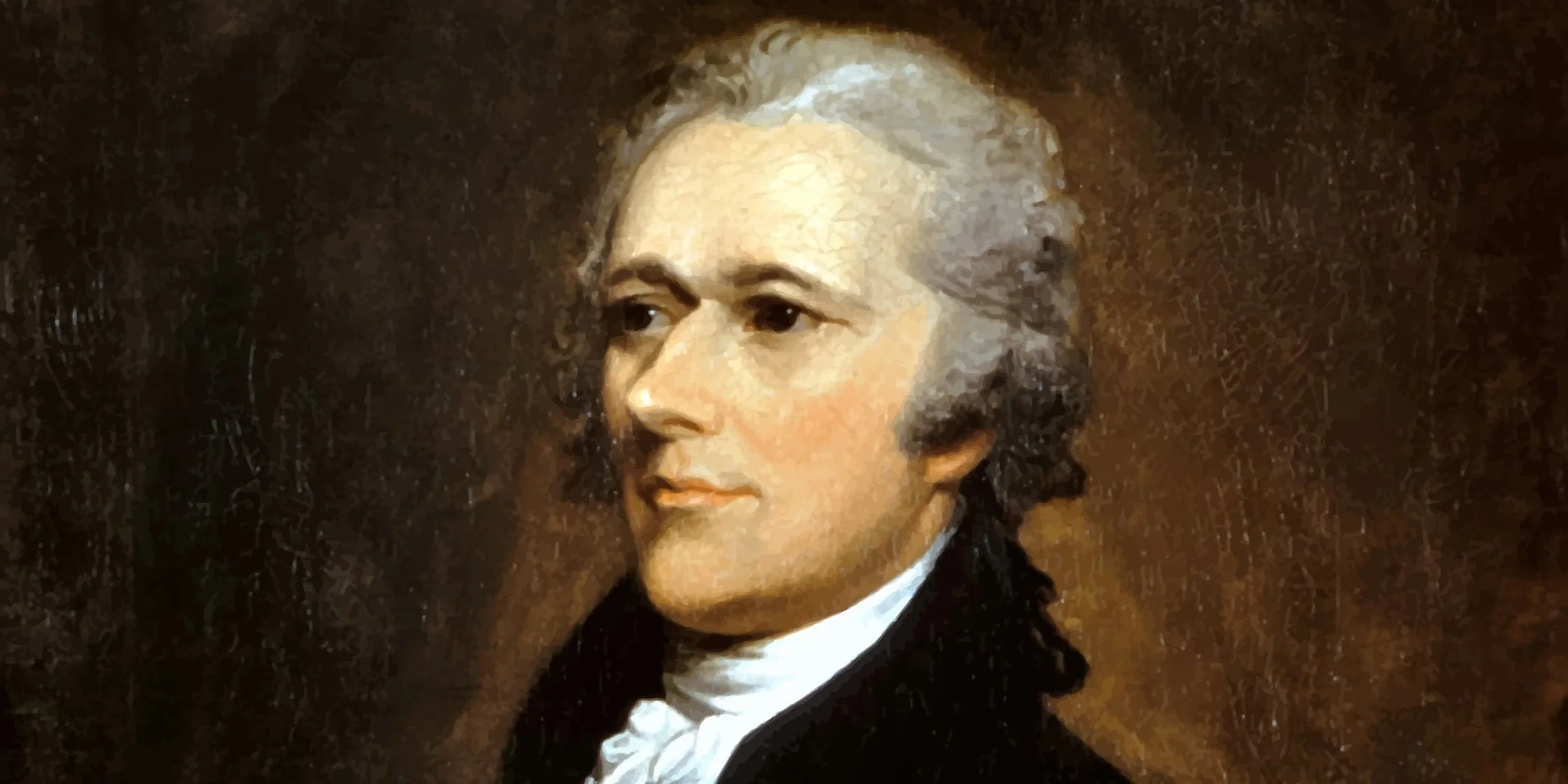
In 2019, I took my wife to see Lin-Manuel Miranda’s hit Broadway musical Hamilton on its inaugural visit to Tulsa’s Performing Arts Center. If you're not familiar with it, the musical is inspired by Ron Chernow’s biography of Alexander Hamilton, but is set to modern hip-hop tunes with fast-paced rap dialogue. Since its debut, it has earned 11 Tony Awards, a Pulitzer Prize, and a Grammy, among countless other accolades. While it’s probably not often referenced in classical school newsletters, it really is creative and well done. However, please don’t take this as a broad-brush endorsement; there are historical inaccuracies, as well as themes and language that are not suitable for families. Overall, though, the performances are top-notch, and it sparked a global interest in one of America’s most inspiring founding fathers. Whether you love or hate theartistic liberties taken—and regardless of how you feel about the U.S. Treasury Department and central banking system (Hamilton’s creations)—the most compelling thing of all is truly Alexander Hamilton himself. While the musical makes evident Hamilton’s pull-yourself-up-by-your-bootstraps attitude and his aptitude for reading, writing, and rhetoric, I want to point out a relatively unknown detail about Hamilton’s education that I think is quite remarkable.
The Classical Education of Alexander Hamilton, et al.
Hamilton, like Jefferson, Madison, Adams, and the other founders, was classically educated (remember: all education was “classical” up until the 1900s). Even George Washington, who had minimal formal education, was an admirer of the classical thinkers and insisted that his stepson be educated in the tradition. Interestingly, however, Hamilton was not cut from the same cloth as many of the more well-to-do founders. Born out of wedlock into poverty in the Caribbean, Hamilton had minimal formal education as a child, although his mother had a small collection of books and likely taught him to read and write. Born into a life of hardship, it grew worse when, at the age of ten, his father abandoned the family. Soon after, his mother grew ill and died a year later, leaving Hamilton alone and destitute. As a twelve-year-old orphan, Hamilton got a job as a clerk for a trading company, and his fortunes soon improved. After a hurricane struck the island, Hamilton wrote a letter vividly describing the storm. The private letter was made public when it was published in a newspaper, which caught the attention of local leaders who then raised money to send him to New York for a formal education. He arrived in 1773 at the age of 16 or 17 and immediately began preparing for enrollment in King’s College (now Columbia University).
Upon arrival in New York, Hamilton had a great deal of work to do in a short amount of time if he was to be admitted to King’s College. He moved in with Francis Barber, headmaster of a grammar school in Elizabethtown, New Jersey. This relationship, paired with Hamilton’s innate drive and grit, enabled him to cram three to four years’ worth of Latin, Greek, and classical literature study into just a few months.
In 1774, when Hamilton was admitted to King's College, the admissions requirements were:
A mastery of arithmetic.
A mastery of Greek and Latin grammar demonstrated by:
The ability to read three orations from Cicero in the original Latin.
The ability to read Virgil’s Aeneid in the original Latin.
The ability to translate the first ten chapters of the Gospel of John from the original Greek into Latin.
No ACT or SAT scores. No application essays or extracurriculars. Just Latin and Greek. Admission to Princeton, the College of William and Mary, and Harvard was identical. A strong understanding of the “dead” languages was considered essential for any educated person. The question is, “why”?
An Argument for Resurrecting the Dead Languages
Classical schools teach the classical languages, either Latin or Greek—sometimes both—not for tradition’s sake but for the way they strengthen vocabulary, improve grammar and writing skills, and provide direct access to original language texts. While modern education emphasizes Spanish, French, or German, and critiques Latin and Greek as impractical, it is actually the opposite. While Latin and Greek (Classical and Koine Greek) are “dead” in the sense that no nation continues to speak them as their native language, they are very much alive and well inside modern English and the Romance languages (Spanish, French, Italian, Portuguese, etc).
Latin was the spoken and written language of Rome for over 1,500 years, roughly 700 BC to 800 AD. Classical Latin, from the period 100 BC to 200 AD, was the language of Cicero, Julius Caesar, Virgil, and Ovid, among others. Today, Latin forms the root of more than 50% of the English vocabulary, especially in the fields of academia, law, medicine, and science. Learning Latin provides students with a clearer understanding of English vocabulary, prefixes, and suffixes, which makes mastering complex English vocabulary more intuitive. Latin has a very precise grammar, which helps train students to think logically and write with clarity. A foundation in Latin not only improves a student’s reading comprehension and writing skills but also prepares students to learn other languages more quickly.
Classical Greek was the highly formal language used by writers like Plato, Aristotle, Sophocles, and Herodotus during the 5th and 4th centuries BC. Koine Greek (pronounced Koy-nay) came later and is the simpler, everyday language used from the 3rd century BC to the 4th century AD. This is the original language of the New Testament Scriptures. Both Classical and Koine Greek helped shape the English language. Words like biology, democracy, and psychology all have Greek roots, and understanding these roots helps students decode complex terms with greater ease. Like Latin, learning Greek gives students access to original language texts—most importantly, the New Testament.
An Example of How Greek Helped Me This Week
Last week, Asbury Church read Acts 20:7-12 as part of our daily Scripture reading guide. This passage describes the rather odd story of a young man named Eutychus (Pronounced YOO-tih-kuss). While visiting the church in Troas (modern-day Turkey), the Apostle Paul preached the gospel to a group of believers in the upper room of a home. Having much to say and needing to leave the following day, Paul preached for hours—until midnight. Scripture is clear that the room was well-lit with lamps, but it wasn’t enough to keep Eutychus, who was reclining near an open window, awake. Eutychus fell into a deep sleep, fell out of the third-story window, hit the ground, and died! Seeing this, Paul rushed down to him, wrapped his arms around his lifeless body, and said, “Don’t be alarmed…He’s alive!” The power of the Holy Spirit resurrected Eutychus, and everyone returned to the upper room, broke bread, and listened to Paul preach until sunrise.
Now, most of us tend to gloss over the hard-to-pronounce names in the Bible. However, with a bit of knowledge of the Greek language, the name Eutychus gives us some insight into this tragedy-turned-comedy story.
The prefix “eu-” comes from the Greek and means “good” or “pleasant”. Here are a few examples you will recognize:
Eulogy = eu (good) + logos (word). Literally: “A Good Word”
Euphemism = eu (good) + phemi (to speak). Literally: “Good Speaking”
Eucharist = eu (good) + charis (grace). Literally “Good Grace”
If we break down the name Eutychus in the same way, it would be: eu (good) + tyché (fortune). His name literally means “Good Fortune” or “Good Luck”! This detail would not have been lost on the original readers of Acts. I believe Luke (the eyewitness author of Acts) includes this story for the light-hearted irony! It’s as if he’s saying, “Remember that time in Troas when Paul was going on and on about Jesus to the point a guy named Eutychus fell asleep, fell out a window, and died? Lucky for him, Paul was there to raise him back to life. Eutychus lived up to his name that day!”
Asbury Classical School Teaches Latin
Asbury Classical School will formally begin teaching Latin in 4th grade. However, even during these younger years, we expose our students to the Latin prefixes and words that will help them better understand the English language and become stronger readers. It’s not easy to learn Latin; it will require Hamilton’s determination and grit. However, I don’t believe that Hamilton and the countless others who came before us were just naturally more determined and gifted with grit. It’s something they earned as a result of their classical education.
Toward a life lived in Christ,
Chris Breiland, Head of School