

The Best Teacher is a Good Book
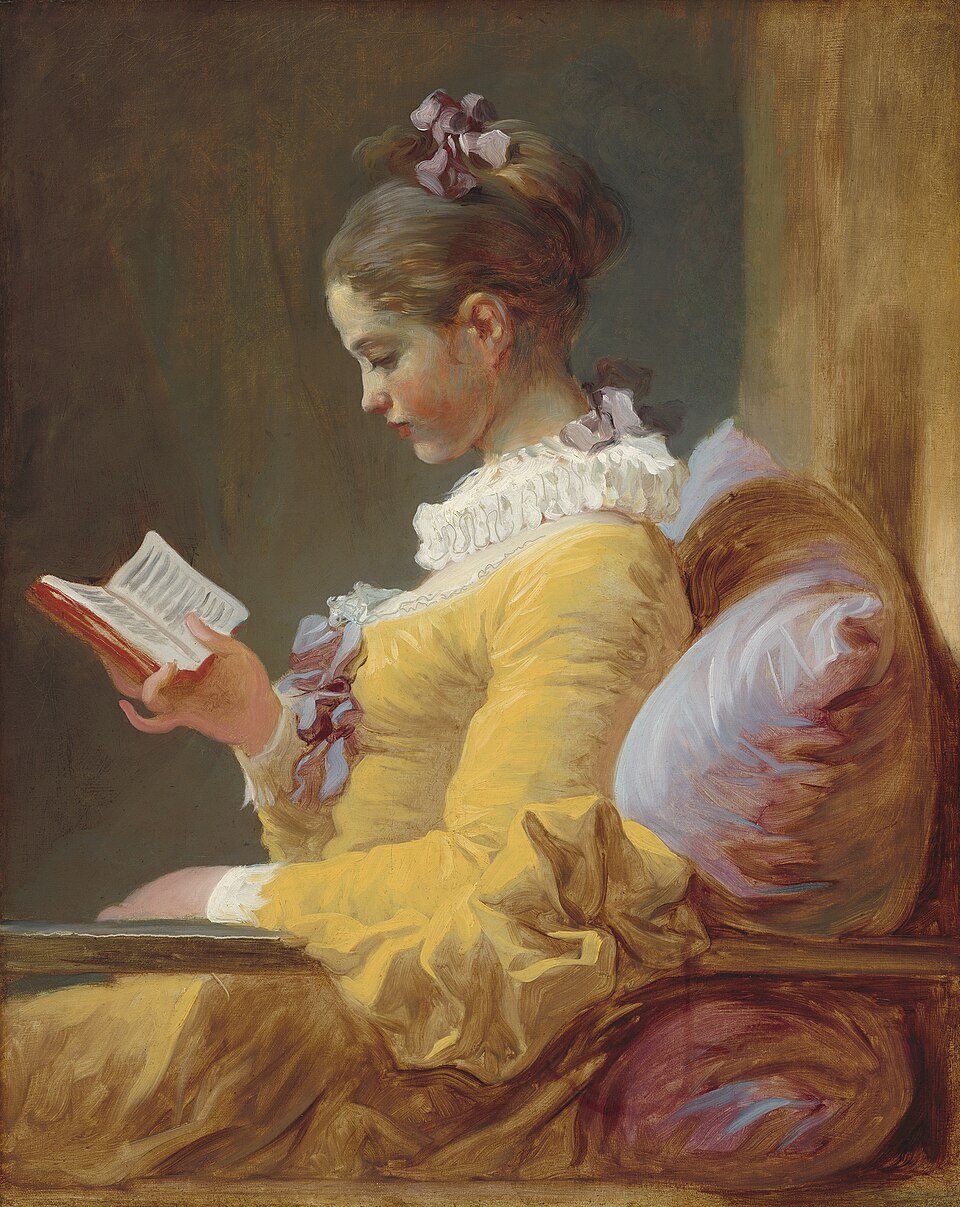
Jean-Honoré Fragonard, A Young Girl Reading, c. 1776–1778, oil on paper mounted on canvas, National Gallery of Art, Washington, D.C., USA.
In the classical tradition, the phrase “Great Books” is often used to refer to a body of literature that has shaped Western civilization. The books span centuries and encompass a wide range of disciplines, including literature, philosophy, theology, science, and politics. While there is really no definitive list of books (though attempts have been made, like this one by Mortimer J. Adler et.al), you will immediately recognize many of the names that are generally agreed upon. The works span from Homer to Augustine, Plato to Dante, Shakespeare to Dostoevsky, and beyond. These books are not “great” merely because of their age, but because they ask and help answer the biggest questions that we have: What is truth? What is justice? What is beauty? What does it mean to be human? These books have stood the test of time, influenced generations, and been read by the greatest minds in Western civilization. If we were to think of all of human history as one long conversation, then the Great Books would be the written record of that conversation. These books have captured the human experience throughout the centuries and have been passed down from one generation to the next.
It’s 2025, Why Should We Read Old Books?
In our modern moment, we have access to all the world’s information at our fingertips, yet wisdom remains rare. The Great Books offer us a remedy. They slow us down and invite contemplation. They cause us to think and reconsider. They expose us to ancient wisdom. They transport us out of our modern context and allow us to see the world through the eyes of those who came before us. Yes, if you have ever cracked the spine of Dante’s Divine Comedy, you know that some old books can be tough reads, but the average reader can still understand them. A Ph.D. is not required. Sure, you could Google the Cliffs Notes for Homer’s Odyssey and get the gist, but then you’ll never truly feel Odysseus’ longing for home and to be reunited with his wife and son. Of course, there are plenty of new books that are good and worth reading, but the difference is that they have not yet been put through their paces. New books have not been read and critiqued for centuries; they haven’t been tested by time.
Reading in a Digital Age
Children today are born into a fast-paced, screen-driven world that disrupts their attention and makes sustained focus nearly impossible. Nonetheless, the human soul still craves meaning, and that meaning is often best discovered through the slow work of reading (this is why reading the Bible is so important; your soul craves it). This is also the reason why nobody ever feels fulfilled or satisfied after mindlessly scrolling through social media; there’s simply no meaning or purpose to it. A good book, on the other hand, can captivate a person and refresh the soul. The question is: Can children still love reading in a distinctly digital world?
I believe the answer is “yes,” but we have our work cut out for us. It will take intentionality and commitment from us as parents.
Four tips for instilling a love of reading in your children :
Read aloud and often, even into the teenage years. Read aloud to your kids, and when they are able, have them read aloud to you. Don’t stop either one just because they reach a certain age or maturity. The most significant predictor of a student’s academic aptitude is how much they were read to and how much they read for themselves as a child.
Model reading as adults. Children learn to love what their parents and teachers love. If we don’t love reading, our children won’t love it either.
Limit screen time. Attention is a skill that requires exercise. Digital habits weaken our attention span, while reading books will strengthen it.
Read quality books. Not all books are created equal. Read stories of depth, virtue, and truth. Don’t settle for the latest thing your local library is promoting, and don’t buy into the mindset of, “As long as they’re reading, I don’t care what they read.” ACS is curating book lists for each grade level. The Classical Reader website is also an excellent resource for finding age-appropriate literature.
Why Do Classical Christian Schools Emphasize Reading and Literature?
I discussed in previous articles that classical Christian education is not merely about preparing students for college or careers but about helping them become fully human under the lordship of Christ. When I say fully human, I mean mature, complete, full of wisdom, virtue, and eloquence. One of the best tools we have to make this happen is through reading great books.
It’s common for students in a classical high school to read works by Homer, Plato, Aristotle, Augustine, Dante, Aquinas, and Shakespeare. Even in the elementary years, students are exposed to these great minds. When our students engage deeply with great books and the ideas they carry, their minds are trained in careful thought and attention. Their moral imagination is shaped as they encounter clear examples of both virtue and vice. Ultimately, they tap into the overarching human story—the great conversation that has shaped Western civilization.
Quality literature causes students to immerse themselves in the stories they are reading. They stand beside Charlotte as she spins words of wisdom into her web. They feel the tug of right and wrong with Edmund in The Lion, the Witch and the Wardrobe. They walk beside Frodo as he carries his burden toward Mount Doom. Through these stories and the truths they carry, students are formed in both intellect and character.
The Best Teacher is a Good Book
At ACS, we don’t just teach students how to read; we teach them to love great books and to love reading itself. We hope our students see books not as relics of a former way of life or as an equal but opposite alternative to screen time, but as the best teachers for us today (yes, even better than YouTube). We believe that a good book, read deeply and discussed with others, truly is one of the best teachers a child (or adult) can have.
Toward a life lived in Christ,
Chris Breiland, Head of School