

The Lost Tools of Learning
In 1947, British author and scholar Dorothy L. Sayers, one of the first women to graduate from Oxford, delivered a lecture at Oxford titled “The Lost Tools of Learning.” Though best known for her detective novels and theological writings, Sayers used this moment to sound an alarm about the direction of modern education, and to propose a way forward that would spark the movement we call “classical education”.
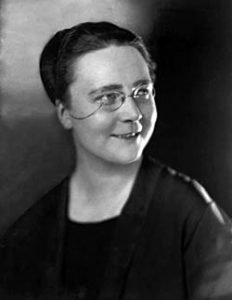
Dorothy Sayers, 1893-1957
What Concerned Her?
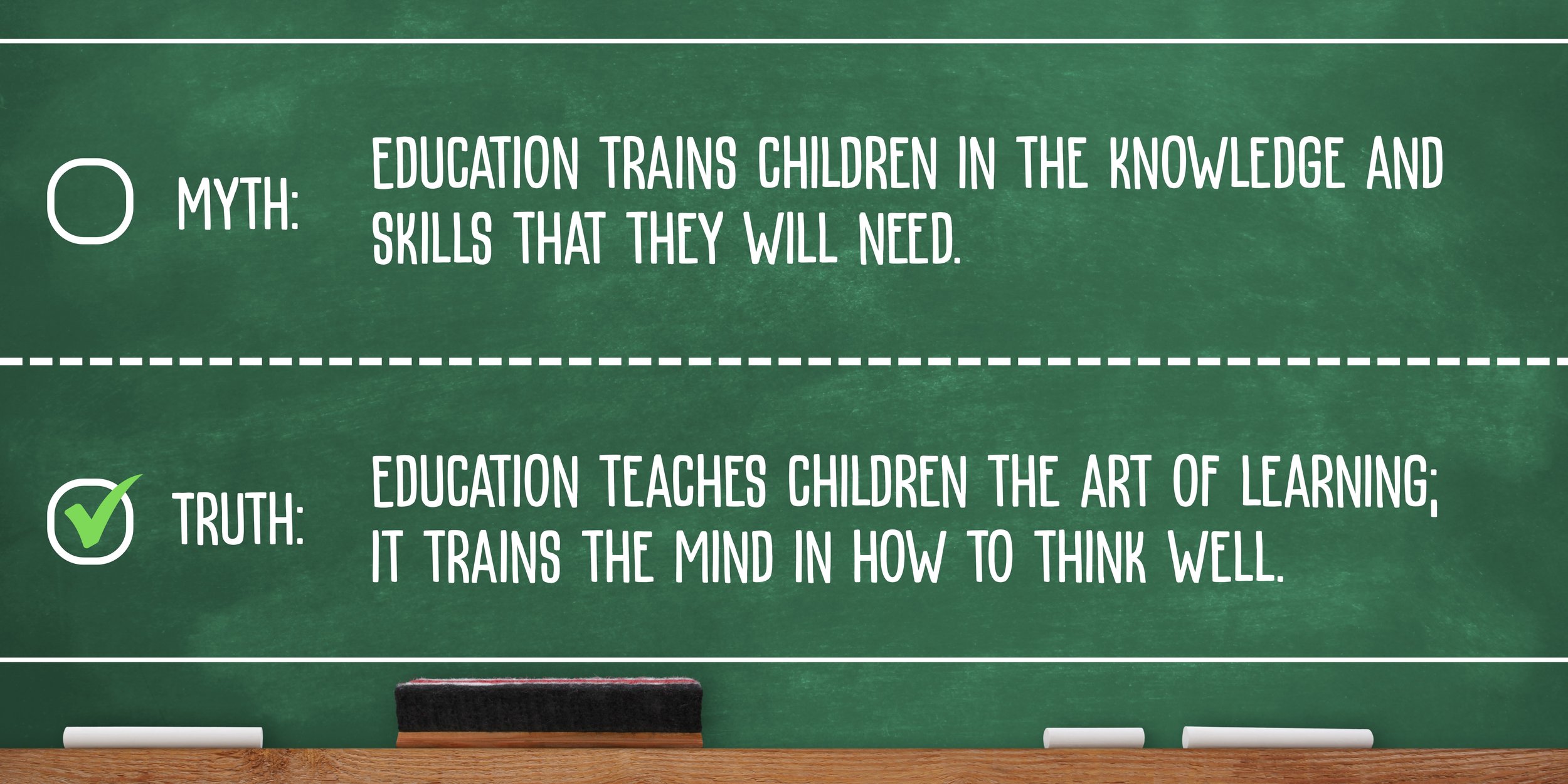
Sayers observed way back in 1947 that while schools were producing students who could recite information or pass exams, they were not producing independent thinkers. She saw a growing inability to reason clearly, argue well, and evaluate truth. In her words, “Although we often succeed in teaching our pupils ‘subjects,’ we fail lamentably on the whole in teaching them how to think. They learn everything, except the art of learning.”
Her Solution: Recover the Trivium
Looking to the past, Sayers suggested we return to the education model passed down from the Greeks to the Romans and developed during the Middle Ages. This classical education is built on three foundational tools called the Trivium:
Grammar – the art of learning the structure and facts of language and subjects (characteristic of younger children who delight in memorization).
Logic (Dialectic) – the art of reasoning and critical thinking (characteristic of middle school students who begin asking “why?”).
Rhetoric – the art of clear, persuasive expression (characteristic of high schoolers who are ready to articulate ideas and lead).
Rather than focusing on career-specific knowledge, this model emphasized teaching students how to learn by giving them the tools to approach any subject with confidence and clarity. Grammar, logic, and rhetoric are tools we use to learn every subject, but they also coincide with the natural stages of human development.
How It Sparked a Movement
Sayers’ lecture lay largely dormant for decades until the 1980s and ’90s, when it became a cornerstone text for the resurgence of classical education in the United States. Educators and parents seeking a more meaningful, time-tested approach to schooling found in The Lost Tools of Learning a powerful vision: an education that cultivates wisdom, virtue, and lifelong learning.
In The Liberal Arts Tradition, authors Kevin Clark and Ravi Jain trace the revival of classical education through four generations:
First Generation (1980s)
The first generation was spearheaded by pioneering educators like Douglas Wilson, who took Sayers’ Lost Tools of Learning seriously and began applying her ideas directly in school settings. These early schools, such as Logos School in Moscow, Idaho, developed the grammar school (elementary), logic school (middle school), and rhetoric school (high school) model and integrated it with a thoroughly Christian worldview. These schools were few, but they were trailblazers. Roughly 100 schools were founded in this phase.
Second Generation (1990s–early 2000s)
As the model proved fruitful, second-generation schools emerged, emphasizing the integrated (i.e., interconnected) study of history, literature, philosophy, theology, and art. These schools also incorporated roundtable discussions of the Great Books of the Western world and the study of Latin and Greek. Networks like the Association of Classical Christian Schools (ACCS) helped to formalize teacher training, develop standards, and implement curriculum models. By the end of this phase, about 200 schools were members of the ACCS.
Third Generation (mid-2000s–2015)
Third-generation schools began reflecting more deeply on what a classical Christian education should be. Augustine’s “rightly ordered affections” became the definition of virtue. The ancient Greek idea of paideia, or the whole process of shaping a human soul toward virtue, reason, and participation in civic life, was popularized. An emphasis on beautiful school décor elevated the classroom experience. Sorting students into “houses” was common and contributed to leadership and relationship development. By the end of this phase, 300 schools were ACCS members.
Fourth Generation (2015–present)
Fourth-generation classical Christian schools represent the most mature and reflective phase of the movement. These schools are marked by a deep commitment to the theological and philosophical foundations of classical education, not simply applying the trivium as a method, but recovering the full scope of the seven liberal arts (grammar, logic, rhetoric; arithmetic, geometry, music, astronomy). They approach education not merely as the transfer of information, but as the formation of the whole person in wisdom, virtue, and worship. There is a renewed emphasis on scholé—restful, joyful learning that fosters contemplation and wonder, rather than the hurried, utilitarian model of modern schooling. There are currently over 475 ACCS member schools with an estimated 500-600 total classical Christian schools in the US. That number is projected to increase to 800-1000 schools by 2030.
Why It Matters for Us
In an age of increasing distraction, ideological confusion, and educational burnout, Dorothy Sayers’ insights continue to resonate because they remind us that education is not merely about passing tests or getting into college—it’s about shaping the whole person to love truth, think clearly, and live wisely. In reclaiming this tradition, we’re not simply returning to the past—we’re preparing our students for a future grounded in wisdom.
Toward a life lived in Christ,
Chris Breiland, Head of School