

You Are What You Love
In the 17th century, French philosopher René Descartes (pronounced Reh-NAY day-KART) was on a philosophical quest to find something (anything) that he could know with absolute certainty—something that couldn’t be doubted. He realized that while he could doubt the existence of almost everything—his senses, the physical world, the spiritual world, even math—he couldn’t doubt the fact that he was doubting. This led him to a simple, but profound conclusion:
If I’m doubting, then I’m thinking.
If I’m thinking, then I must exist.
Therefore: “I think, therefore I am.” (Cogito ergo sum)
“I think, therefore I am” is Descartes’ way of saying: My ability to think is proof that I exist, even if everything else in life is uncertain or unknowable. These words shaped centuries of Western thought, reinforcing theidea that what ultimately defines us as humans is our ability to reason—that we are fundamentally “thinking beings.” In many ways, this emphasis on thinking has influenced everything from how we educate to the way we parent and even how we make disciples.
We assume that if we can just think the right thoughts or know the right facts, everything else will just fall into place.
But what if that’s not quite right?
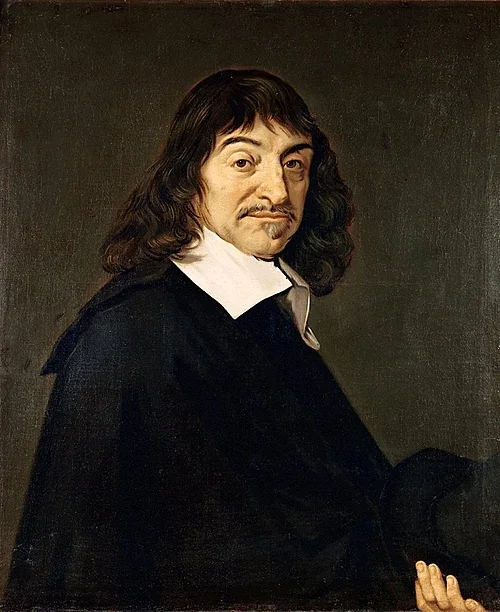
Frans Hals, René Descartes, c. 1649, oil on canvas, Musée du Louvre, Paris, France.
This handsome devil was a pioneer in the school of thought called “rationalism,” or the idea that human reason takes precedence over all other ways of acquiring knowledge, including faith, tradition, and sensory experience (what we can see, hear, touch, taste, and smell). Rationalism would ultimately contribute to modernity’s rejection of God, truth, faith, and all things spiritual on the grounds that they are unknowable and thus “unreasonable”.
Now, the human ability to think and reason is obviously a gift from God, and it certainly sets humans apart from all other creatures on Earth. However, to claim that humans are merely thinking beings is to reduce humans to brains-on-a-stick. It also implies that simply knowing the right information can solve every problem in life. To which any person who has committed to a New Year’s resolution and failed by day three knows is not true.
The reality is that what truly makes us who we are often runs much deeper than thought. Humans are shaped most profoundly not just by what we know, but by what we love. In other words, humans are not fundamentally thinking beings; we are loving beings.And love isn’t merely a feeling or a choice we make in a moment—it’s something formed in us over time. It takes root in the rhythms and routines of our lives, in the things we repeat and give ourselves to day after day. Thepeople we spend time with, the places we go, the activities we participate in or don’t participate in, these habits, or to use the church’s language, liturgies, quietly and powerfully aim our hearts toward certain ends. They teach us what to value, what to pursue, and ultimately, who we are becoming.
This is why the practices we surround our children with matter so deeply. Whether it’s the way we begin theschool day, whether we pray together and go to church, what we celebrate at home, or what fills our time and attention throughout the week, these repeated actions shape their affections. Our children are always being formed, not just through the lessons they hear, but through the lives they live.
At Asbury Classical School, we recognize this. That’s why we build our days around practices that do more than convey information. We want our students to love what is good, not just know about what is good. Through Scripture memory, prayer, song, recitation, and a culture of reverence and joy, we are helping shape hearts just as much as minds.
The same is true at home. As parents, we are constantly laying down formative patterns, whether we intend to or not, for good or for ill. Thequestion is not whether our children are being shaped, but by what. What do our habits and home routines say about what matters most? What are we really teaching them to desire in life?
If we want our children to grow into people who don’t just know the truth but delight in it—who don’t just recite Scripture but treasure it—we must be attentive to the habits that shape their affections.
Because in the end, it’s not just what they think that will shape who they become.
It’s what they love.
Toward a life lived in Christ,
Chris Breiland, Head of School